Showing posts with label max steiner. Show all posts

Wednesday, 13 November 2013

BBC Proms 2013: Hollywood Rhapsody ( Prom 59 ) performed by John Wilson's Orchestra


This time last year I was watching YouTube videos on my lunch break, mainly live performances of soundtracks. Eventually I came across several BBC Proms film nights and immediately I wanted to see a Prom in person. For a very reasonable price I got two tickets for Prom 59 - Hollywood Rhapsody Night performed by John Wilson's orchestra on Monday 26th August. I had never heard of John Wilson, nor seen a live orchestra, or even been to the Royal Albert Hall for that matter. For months I anticipated the performance; it did not disappoint.


What a night. What an experience. I cannot believe I have never attended a Prom before and I am adamant that I will attend one every year for the rest of my life! In this blogpost I will attempt to describe the evening, the music, and the performance as well as I can (and try to make it interesting). The best way for me to do that is to describe the evening in chronological order. Below you will find the full concert on YouTube; I'll be using the times on this video in my descriptions so it should be easy for you to follow. The concert begins... BEWARE THERE ARE FILM SPOILERS IN THE FOLLOWING POSTS. 


Alfred Newman: 20th Century Fox Fanfare & Street Scene (1931)

0:00 - 08:44 mins
It was so weird hearing the Fox Fanfare live. Everyone knows this piece, wherever you are, if you hear that fanfare you feel yourself thinking, where's the popcorn?, like if you're about to enjoy a cinematic experience. It sets you on autopilot. Those military-like drums, followed by the booming brass, and distinctive strings, really wake you up and alert you to keep watching - you're about to witness something great.

As for Street Scene, I have never seen the film itself, however I have seen How To Marry a Millionaire numerous times (where it was re-used). Wilson's use of it to open the concert was interesting. It's a very dramatic piece and has a wonderful buzz to it - mirroring the idea of bustling streets and busy city life. It opens our musical senses and starts them turning readily for the rest of the show. It was the ideal appetiser.


Bronislau Kaper: Forever, Darling (1956) - Confetti 

08:44 - 11:27mins

Light and lively, this piece lifted the spirits and conjured images of romantic comedies from the golden era. A serene and jolly calm before the concert took a dive into darker tunes from murkier movies...


David Raskin: Laura (1944) - Suite


11:27 - 17:47 mins

I adore the film Laura; the plot isn't just captivating from start to finish but dotted with exquisite moments of humour, crime, and romance. Everyone remembers the villain, the detective, and Laura herself, but possibly the most memorable element of Laura was the title theme.

Wilson begins conducting the piece with a grimace on his face, and rightly so. The opening bars of the Laura suite are unnerving and haunting - ominous low notes play, reminding us that we are in the dark world of film noir and that there is murder afoot. Then the unmistakeable Laura theme is introduced quietly, a beautiful lady plucked from the dark depths of noir as if by magic. For anyone who has seen the film, we immediately see the painting of Laura, looking ever-so dreamy, and our detective falling slowly in love with her image and memory - as told to him by suspects.

Every man who encounters Laura falls in love with her. For the film they had Gene Tierney play the title role, which made it easily believable that all who met her would fall for her - she was ridiculously beautiful after all. But the film needed more than that. It needed music to enhance her beauty by creating added wonder, tragedy, romance, and the idea of obsession. Hearing the music without watching the film, you could hear the music as it was meant to be heard - it was the sound of Laura's spell which bewitched every man who knew her, with the unmistakable notes of doom lurking beneath that romantic sweep.


Bernard Herrman: Psycho (1960) - Suite for Strings


17:47 - 24:55 mins

The most recognised film score of all time? Possibly. Even if you haven't seen the film Psycho, odds are you've heard the theme. I had seen old Proms performances of Psycho online, but that didn't ruin the experience for me at all. Hearing the music live is very different and seeing the effect on people in the audience is unique. What I really remember from my seat so high-up in that hall was all of these violin bows moving frantically and briskly - as if in a frenzy. But of course that is the genius of Herrman the composer.

His music had to physically resemble the psychotic mind of our killer and frenzy of the killings themselves. Additionally, the piercing notes we hear from the strings are painful and make us uncomfortable, which is how we should feel. This isn't a pleasant tale and the film itself is disturbing. What is wonderful is that Herrman composed a suite that enhanced the films impact, and immeasurably so.

The opening title sequence is quite dizzying and there is this feeling of a chase, that we are running from something (like Janet Leigh in her car), but soon we come to a quick demise and the notes become slower and lower. This is the calm before the storm, because shortly afterm we hear the infamous theme for the shower scene. Watching it performed live, you see the violence of the piece. Even without watching the murder, the musicians themselves look as if they are murdering their instruments. Bows slashing down hard ferociously at the strings - the piece is very violent and a mirror image of the action of the killing. The entire audience would have felt unnerved at some point during this suite, and I'd bet money that most had hairs standing up at the back of their necks.


Citizen Kane (1941) - Salammbo's Aria


24:55 - 29:40 mins

I was slightly disappointed when I saw which part from the Citizen Kane soundtrack was being performed. I was hoping for 'Snow Picture,' but I had no need to be disappointed. This stunning aria escaped my notice with my viewings of Kane, and I have no idea why! It is a show-stopper! Super dramatic with its big notes echoing through the hall, all sung sublimely by soprano, Venera Gimadieva... it was a beautiful and wonderful piece. I've never seen an opera singer live before but it's quite an experience hearing such a strong voice fill the concert hall.


Erich Wolfgang Korngold: The Adventures of Robin Hood (1938) - Suite


29:40 - 46:50 mins

One of the first classic films I ever watched and definitely one of my favourites, I was always going to be biased when it came to this performance. The soundtrack from The Adventures of Robin Hood is one of the greatest and I feel so honoured and lucky to have had the privilege of hearing the suite performed live in all its splendour. The opening bars are full of life, colour, and the excitement of the film. You can instantly see Errol Flynn swinging around Sherwood forest, laughing in the face of danger, and surrounded by his Merry Men. But even more so, you hear the unmistakable sound of the Golden Era, Hollywood at her biggest and best. This soundtrack has everything and changed everything when it came to sound in film. Such an incredible blend of medieval sounds with that indisputably Hollywood sweeping of strings - this suite is to die for. I was over the moon when I saw that it was going to be performed, and thankfully, John Wilson and his orchestra exceeded all expectations.

34 mins - The love theme from The Adventures of Robin Hood begins. This is my favourite piece of film music, no competition whatsoever. No other piece is as romantic, magical, dreamy, or majestic. The opening bars seem to flutter higher and higher (just as we are going high up into the castle, into Maid Marian's chamber where Robin Hood will soon appear). A trumpet plays a few romantic notes but because it's a trumpet, it also represents the sound of good and justice (that which Robin and Marian are fighting for - it has already been noted in many studies how Korngold kept the idea of justice in every scene, even the romantic ones). And it goes on, with the whole orchestra sweeping round and round and up and up in this beautiful romance - as if we're walking on air like Maid Marian.

38 mins - Now the piece goes up another level. My favourite part of the whole love theme - where things get serious between Robin and Marian. They declare their love for each other and vow to fight for the good of England, no matter what danger they are in. The cello (?) at 38:10 mins reflects the seriousness of their peril. Marian is in danger in the castle, and Robin doesn't want to leave her there because he loves her, but he knows that she must stay for the good of the land. It is a very tender, serious moment between the pair, and the cello is the perfect sound for that. At 38:45 mins we have the sax popping in again - super smooth and soothing - reminding us that this is a romantic meeting and not a political one.

From there on, the music just gets fuller and bigger. The orchestra is on full power mode, and mirrors Robin sweeping Marian off her feet. Even Wilson's gestures look as if he is preparing for the final hurdle - the big finale of the piece. This is where Korngold outdoes himself. At 39:10 mins we are shown Wilson again, and his movements... he looks like a magician casting some sort of intricate, delicate spell - how much more beautiful can this music get? His movements are magic, and the camera zooms in to show him closer at 39:19 mins... He is completely caught-up in the music, and his gestures show the intense emotion of the piece. On the night I wasn't able to see Wilson closely, but watching the concert on television a week later was wonderful to see because it showed how into the piece he was, how even he, after god knows how many times of conducting it, was still affected by it.

The piece has reached its finale, and our orchestra/conductor go into overdrive. Never mind the Olympics, the next few minutes look like the world's hardest workout. The precision, effort, and strength needed to perform this flawlessly is unimaginable (the commentary on the televised version said how the musicians stated that this was the hardest piece they had to perform). The talent of these people and their focus/power is incredible, and seeing it all on stage in those moments performing the most genius and beautiful of musical works, was astounding. The final 30 seconds are quieter and softer - Robin is bidding Marian goodbye. Again this is a very tender, intimate moment, because they know that they are both in danger, and they don't want to leave each other, but they must. As Robin climbs down the vines in the dark of the night, Marian watches lovingly and proudly at our hero and her love... just the fact the Korngold knew to tone things down for that goodbye shows how gifted he was.

Of course, that is the end of the love theme but not the suite itself. We follow with the battle scene and the victory - all big, brash, and full of Hollywood vibrancy. But for me nothing comes close to the love theme. Words fail to describe it and do it justice. Hearing and watching Wilson and his orchestra is what you need to do to fully understand it's beauty, power, and Hollywood quality. Even someone who hated classical music and never wanted to even think of giving it a chance would be blown away by this part of the performance. It is one of those pieces that touches the heart and transcends the soul. I was moved to tears, not because of the fact it was my favourite piece, or because I loved the film, or even because it conjured images of Flynn and deHavilland in their prime. I was brought to tears because this orchestra had made that piece even more enchanting than I could ever have imagined. It was all rather overwhelming.


*INTERVAL 20 MINUTES*


Jerome Moss: The Big Country (1958) - Main Title


52:33 - 56:23 mins

Those strings are absolutely fantastic live in this piece. They fill the concert hall, illuminating in our minds the vision of great expanses of land far out in the Old West. Big, brassy, and loud, this was sensational. After a short interval, it threw us straight into the thick of things again.


Max Steiner: Casablanca (1942) - Suite


56:23 - 1:05:20 mins
The suite for Casablanca is so clever with it's layers and multiple themes. Bursting open with fanfare and then descending into an exotic melody that is both adventurous and dangerous, hinting that we are in a warmer, foreign lands for this film. But the vibrant, tropical tune soon dissipates into the Marseillaise and then into Deutschland uber alles - thus telling us that this is the Second World War, and here it is a case of the Allies and the Nazis. Just from those opening bars Steiner tells his audience the location, the era, and the political situation - genius! These two national anthems are dotted throughout the score of Casablanca and really provide enormous depth to the soundtrack and enhance the feeling of patriotism in the film. But they are usually only snippets, so as not to cloud the plot with too much doom. So before long, we have the exotic, adventure theme back in play. 

Two minutes into the suite and we finally hear the distinctive melody of As Time Goes By, a song that is interwoven in the fabric of the entire Casablanca score. Light, romantic, and memorable, the tune provides the backdrop for our romantic and tragic story - that of Rick and Ilsa. What is remarkable is that the theme of As Times Goes By gets stronger, more powerful, and fuller as the film progresses. When we first hear it, it's like an old memory - the long lost love that our lovers left in Paris. This is shown via a piano solo - replicating Dooley Wilson's role as Sam. But as they rekindle their affair and the love they felt is shared again, the theme goes from strength to strength, until it is played out in full throttle, loud and proud, at the end of the film... here's looking at you kid. It is at its strongest when the lovers show the ultimate gesture of love.

Casablanca is the perfect film and it has the perfect soundtrack. What Steiner did is combine all the elements of the plot into a beautiful blend of a score, but always keeping the theme of As Time Goes By at the forefront of it all. Wilson and his orchestra performed this suite masterfully. 


Movie Theme Song Medley

1:05:20 - 1:20:15 mins

The artists who performed the vocals for this medley were soprano, Jane Monheit, and vocalist, Matthew Ford, respectively. This was a real treat. A breather from the serious scores and suites we've had the pleasure of listening to for the past hour. An array of greats were sung and they were really brought to life. My favourite from this ensemble had to be the title song of Love Is a Many-Splendored Thing. 


Franx Waxman: A Place In The Sun (1951) - Suite


1:20:15 - 1:28:53 mins

If you want sensual romance, then look no further than A Place In The Sun. Again, one of my first films from the era, and very much a favourite, A Place In The Sun boasts the most beautiful couple in movie history and some of the most romantic moments preserved on film - all served with intense sensuality provided by a solo saxophone (here performed by the excellent, Howard McGill).

Like with most great romances, this one between George Eastman and Angela Vickers has a backdrop of tragedy. Waxman, as always, keeps the foreboding doom of George lurking beneath the score. Let's face it - the underlying theme of this film is unwanted pregnancy, dark waters, drowning, murder in mind, and accidental death... hardly romantic. Throughout the film George is anxious and in emotional turmoil - sometimes in the highest ecstasy as he dances with the lovely Angela, then plunging into the desperate depths of trying to shake-off his former life, and the girl he wants to leave behind. Not to mention later the guilt of his actions and the certainty of him being caught by the police and being lost to Angela forever. 

Of course, in Hollywood, our protagonist is allowed a breather, and so is the score. When we are not hearing those ominous notes of the sax alerting our hero, we are swept off our feet by a theme full of passion and as ravishing as our young stars, Clift and Taylor. There is no other word to describe the score of George and Angela's romance but dreamy. Dreamy, magical, and an eternal dance between young lovers in the height of summer. Our sax even makes an appearance to highlight the sexual tension of the pair and intense desire they feel for each other (it also hints at the heat of the summer). I love how in the film a sax solo is played when George first sees Angela - it's so simple yet speaks volumes. She looks immaculately glamorous, gorgeous, and completely out of his league. Like an angel. But he wants her. 

Wilson and his orchestra's performance were nothing short of majestic here. It's as if every note that came from that saxophone brought with it clouded images of Clift and Taylor dancing, declaring their love, and spending the best part of their time saying goodbye. Such a stunning score and from a stunning film, Waxman creates an immortal theme for those immortalised images of Clift and Taylor on screen. This was definitely a highlight of the evening.


Scott Bradley: Tom and Jerry at MGM

1:28:53 - 1:36:33 mins

Now this was a real surprise. When I saw Tom and Jerry in the programme my first thoughts were, that's a bit odd. Why has John Wilson chosen that? I seriously had my doubts. Like most kids I liked the cartoon, but I didn't think the theme was suitable for this concert. How wrong was I? From a general point of view, this was what people went home talking about at the end of the night. 

Where I was sat, very high up, I didn't actually see the percussion's performance until I saw the concert televised. But still, the sound was incredible, and hugely entertaining. I cannot imagine the amount of hours put into piecing this music together, nor the amount of rehearsal time. It was worth it though. The performance was spectacular and a thrill to see. 

The programme states, 'the cartoons are largely dialogue-free, yet Bradley's dazzling, wall-to-wall music passes almost unnoticed because it's so precisely expressive of the all-consuming action.' They've hit the nail on the head here because when you watch the cartoons you see the action, you don't notice the music. But when watching this performance you didn't have the action in front of you, all you had was the music, and yet every single performance by every instrument was so precise (kudos, Scott Bradley) that we could see the action in our heads. I could see Jerry being chased, Tom being the chaser, Jerry tip-toeing, Tom creeping, one of them banging into something and shaking from head to foot, one of them being knocked out and feeling dizzy, things flying through the air - all mixed in with a super-chilled, charming melody - this is the norm in the Tom and Jerry household! Jerry's moment sounded slightly softer, effortless, and sweet, whilst Tom's had a harsher, devilish ring to theirs. The percussion were armed with all sorts of strange instruments for this segment - multiple horns, and a dustbin where they would smash plates - replicating the chaos and destruction caused by Tom and Jerry's mischief. There are even a few screams thrown in there - nothing was left out!

My favourite sounds were those like at 1:30:44 (Wilson even shows a little grin when we first hear that sound). It's a funny sound anyway, and even though I can't place exactly where it appears in the cartoons, I imagined it would be where Tom encounters a trick left to him by Jerry, or vice versa. I could be wrong but that's why I'd laugh. 

Wilson and the entire orchestra really looked like they had a blast with this one. The whole piece expresses the chase of Tom and Jerry and how they endeavoured on a perpetual battle of wits. You couldn't help but smile whilst you watched this, and laugh at all the hilarious sounds the musicians recreated. The whole theatre was smiling and cheering by the end, not just because of the fabulous show, but for the action-packed, remarkable nature of the performance. And not forgetting, the genius of Scott Bradley.


Miklos Rozsa: Ben-Hur (1959) - Suite


1:36:33- 1:44:00 mins
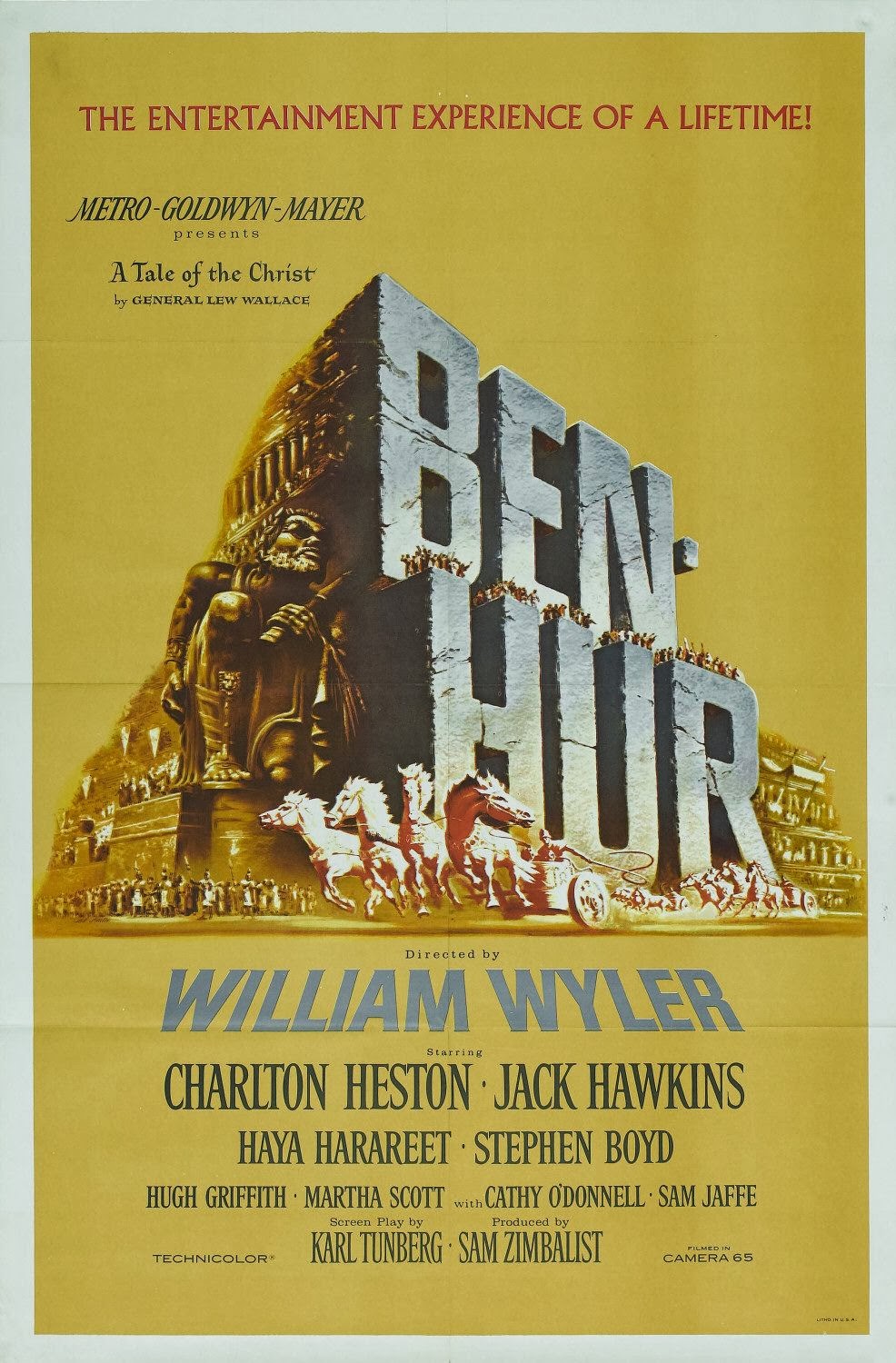
Now at the very beginning of the concert I noticed that behind the stage was an enormous organ. I don't know why but I'm always fascinated by organs - whether it's in a cathedral or theatre, they just always dominate the structure with their huge pipes and imposing size. The one in the Royal Albert Hall is a monster and I was thinking throughout the entire concert - I hope they play that! They saved the best for last, and probably with the best soundtrack to showcase the power of an organ. Ben-Hur is an epic film in every sense - it's story, it's length, and it's hero. You need one hell of a soundtrack to carry those chariot races and the physique of Charlton Heston, and Miklos Rozsa really pulled it out of the bag with this one. 


As is pretty obvious if you read this blogpost, you'll notice how picky I am with opening bars of scores. This one is exceptional. Talk about dramatic. You feel as if you've opened some ancient chest lost in the sands of some faraway desert. Those opening bars tell us that Rozsa means business - this is a tale of epic heroism, bravery, and unmatched entertainment on the largest scale. The organ, that I'd had my eye on for the past hour and a half, is finally in use - thundering through the theatre and shaking the building from head to foot. During an era where Hollywood churned out Roman epics (or rather, sword-and-sandal pictures), Ben-Hur stood head and shoulders above them all. The score is equally as show-stopping as the film and it's Oscar-winning star, Heston. It's one of those scores where the orchestra are put on overdrive, and the composer pushed the boundaries on writing a film score. What a way to end the set. A brilliant choice by Wilson and performed flawlessly by the orchestra - you wouldn't think that they'd been playing extremely difficult, intricate, scores for near two hours straight. 


Franz Waxman: 'The Ride of the Cossacks' from Taras Bulba (1962)


1:45:44 - 1:51:00 mins
A total surprise - this was not in the programme! I haven't seen or even heard of Taras Bulba, but I definitely knew the theme. What a wonderful treat to not have the show end just yet!

As you can imagine, the sold-out audience gave a standing ovation and determined applause to those exceptional musicians and that wonderful conductor. Everyone was on their feet, everyone had a beaming smile, and everyones hands were probably sore after the amount of clapping. I'd had a great day in London and was overly happy anyway because I was on a mini break, but this concert elevated my mood even more. Nothing could get me down for days afterward. I had one of the best nights of my life, and all for £21?


So, what did I learn from my first experience at BBC Proms?
Firstly, book tickets on the day they are released. Even though I had a great evening and the sound was superb, sitting right at the top of the Royal Albert Hall was uncomfortable, cramped, and warm. Plus I missed seeing the conductor and musicians up-close and had to wait for the televised version to see any bits I'd missed (this was very noticeable in the Tom & Jerry segment)

Secondly, I dressed fine. We experienced a very warm summer in the UK this year, but I wasn't cold in the theatre. I'd advise having a cardigan or a light jacket/blazer with you just in case. 

Thirdly, make the most of the place. During the intermission I thought I don't need refreshment but I bought some Haagen Dazs iced cream (vanilla - amazing!) and loved it. Sometimes we can be a bit stingey when we've spent money on tickets, travel, meals that day, and other touristy things, but so what. You're there now and you won't get this evening back. Odds are you won't have a proper break like this for another year, so buy the programme, buy some refreshment, have a drink at the bar. Make the most of your surroundings. 

I had the absolute best time at Proms and intend to go next year - especially if John Wilson's orchestra are playing. I love classic Hollywood and it's so rare to actually get a chance at hearing music from that era live. But that's what is so great about BBC Proms, it gives you the opportunity to hear all that wonderful music and see that incredible talent - something you may not have considered doing before. I highly recommend Proms. Take a day trip to London and stay overnight, or spend the weekend in the capital - there is so much to see, do, and enjoy, and Proms will just be the cherry on the cake for you. 

A final word on John Wilson - as with anything I watch or hear I look up the actor/film/etc online afterwards. There are interviews with him on YouTube and this man works really hard. The amount of effort he puts into arranging these concerts is unreal, especially when you consider how most of the music he works with was destroyed decades ago. For someone to spend their life piecing together lost music and trying to get the music just right, is incredible and I admire Wilson enormously. His gift for music and passion means that people like myself get to enjoy wonderful concerts like the Prom he put on this summer. His orchestra are supremely gifted and talented - the sheer skill they demonstrated on that stage was breathtaking and made me pretty jealous - I wish I could play an instrument and play as well as any one of them. It was an honour, privilege, and pleasure to be present that evening. From what I understand John Wilson's orchestra tour every year and they have an album out. Fingers crossed they perform at Proms next year!

Sunday, 15 April 2012

Now, Voyager: Beyond the realms of romance

Irving Rapper's Now, Voyager (1942) is a timeless classic of a romance that has been a firm favourite with romance-movie fans since it's release. At the age of 14 - long before I had any knowledge about Hollywood, I caught it accidentally on television one afternoon. I can't really remember much about my first reaction to the film, but what I do remember, is that I was intrigued from the moment I started watching it, and ended up falling in love with the film by the end.

The film follows the life of a woman, Charlotte Vale (Bette Davis), who comes from a wealthy family in high society Boston. Having spent nearly all her life living under the strict rules of her mother (Gladys Cooper), she lives a life deprived of the things a young woman of her age should be doing, and as a result of that, becomes incredibly ill. Worried for her sister's health, Lisa (Ilka Chase) asks her psychiatrist friend Dr. Jaquith (Claude Rains) to meet and diagnose her sister. After speaking with her alone and witnessing the severe depression Charlotte is suffering, Dr. Jaquith decides to take her to his sanitarium in the countryside, where he helps her rest, build up confidence, and undergo a makeover. Once she has recovered, Dr. Jaquith and Lisa send Charlotte on a pleasure cruise where she can refine herself as a lady, make friends, and maybe even pursue a romance. On this cruise, she meets a charming Frenchman named Jerry (Paul Henreid), a married man with two children. The two are forced to accompany each other on the cruise, and end up falling in love with each other, and so the story continues on the journey of their romance, whether Charlotte can sustain her independence when she returns home and lives with her mother, and whether of course, the pair end up together.
Before
After 

The physical transformation that Charlotte undergoes is really quite remarkable, and I must applaud Davis on agreeing to look so unattractive at the beginning of the movie. She starts the film as a little overweight, with frizzy hair in a Victorian style bun. She wears thick, heavy glasses that cover up her face more than anything, and her eye brows have not been groomed, so she has thick, bushy, dark brows. I don't know whether these eye brows are fake, or whether Davis just grew hers naturally - either way, this was very brave of her, and not many Hollywood actresses at the time would have agreed to make themselves look so unattractive, but Davis has always been known for putting the part before her vanity. This allowance made by Davis makes her character of Charlotte appear like an elderly woman, but once she has her makeover, we see that she is actually in her mid-to-late twenties.

The first time we see her is in that infamous moment where the entire cruise party is eager to see who the lady who never left her cabin is, and what she looks like when they make their first stop. They all turn their heads, the camera cuts to a shot of the someone's feet, most likely a woman's, in fancy heels, the camera pans up to head, revealing a smart, stylish outfit and a slim figure. Where the camera stops is a miraculous transformation - a beautiful woman with groomed brows, flawless skin, glamorous make-up, and an elegant hat, looks down at the crowd watching her, gives a little smile (knowing that she has made an impression), and finally gains the courage to strut her stuff down the plank and to the tour guide. We finally recognise Bette Davis, the movie star we all love, and I believe that moment is still one the top cinema makeover revelation there has ever been, beating Audrey Hepburn in Sabrina (1954) and Julia Roberts in Pretty Woman (1990). I think Bette actually looks her best in this movie, every inch the movie star, with a poise and elegance that is not only captivating, but in a league of it's own. And the best thing about it, it doesn't detract from her incredible talent or her outstanding performance.

If you haven't seen the film, then please don't read further. The romance in this movie is one of the best Hollywood has to offer. It is one of such pure love, of such mutual affection that it really goes beyond the realms of your normal movie romance. The first time Charlotte and Jerry meet, he is very charming, and although she is quite unresponsive at first, he gently pulls her out of her shell, not forcefully or overbearingly like most men in these films. Even though it seems that he is attracted to her because he cannot take his eyes off her face, it seems more like he is completely spellbound with her mystery and shyness: it's as if he can see the woman underneath who is dying to come out, a woman who is holding back. He waits patiently, asks her questions, but talks of himself as well in order to make her feel comfortable and like they are getting to know each other. This is what is so remarkable, it would seem as though he knew her already, he knew exactly how to approach her, and it is he who helps her find herself.


After this initial wariness on her part, the two bond and become very chummy on their visit to Rio. The fact that he tells her from the moment he meets her that he is married makes the romance even more touching, because both parties are just friends, they laugh and talk together, and enjoy each other's company - no strings attached, no hidden agenda. I think the scene where they are trapped in the mountains after their car crashes and they are forced to stay in a shack is particularly lovely, for both are sleeping close to each other but not in any kind of way that looks suspicious. Like a pair of children who are best friends and out camping, they sleep facing each other, close enough so as to keep warm, but no closer than that. Jerry watches her as she sleeps and makes sure she has enough blanket covering her. I must say the way Henreid acts here is beautiful, the way he stares at her isn't creepy at all, instead his eyes are full of affection, and of confusion too, for we know he is thinking about how he feels. The fact that he kisses her, I think is the perfect touch to the scene, because waking her up and making a declaration of love, or holding her would be too much. That momentary kiss is, again, the right balance of how he feels for Charlotte, whilst remembering his loyalty as a husband.

And that is the one thing that ruins everything, he's married. It is so heartbreaking in films when two people seem so alike, and who believe that they will be the happiest they could ever be if married to one another, are unable to. Now, Voyager is no different. Both Charlotte and Jerry are miserable, she at home with her mother, and he with his wife. He cannot leave her because she depends on him so much, but treats him terribly. It is this situation that provides the single obstacle that stops him from marrying her. They attempt to end their affair at the airport in Buenos Aires. This scene is set up brilliantly, with the aeroplane in the background, we know they only have minutes before being out of each other's lives. Charlotte is dressed in an outfit that looks slightly bridal, and even wears a hat with a netted veil attached to it. Looking at her we feel that yes, she should be his bride, and they should both be catching that plane to enjoy their honeymoon. But no. Instead that net provides a barrier between them, one that cannot be broken. It also represents the prison lifestyle Charlotte's mother enforces on her at home. They are both trapped, and even though they share a kiss through the netting, it is not full contact with each other, it is not togetherness.

Paul Henreid really shone for me in this film, more so than he did in Casablanca (1942) even though he was very good in that too. But what I found so much more admirable in his performance is that he made us feel sorry for him, and not judge him for loving another woman when he was married. There have been many romances in films involving married people, and although they are all very moving, most of them do feel like the man or the woman is acting wrongly, and unfairly to their spouse. But I never felt that with Jerry. Henreid plays him with great charm, and he does seem to keep pulling Charlotte back to him, but the way he looks at her, talks to her is full of love, and affection, and pain at not being able to carry out what he most wants to do  - marry her. At least Charlotte can hope to fall in love with someone else, she free to go and love/marry who she chooses, but Jerry is trapped in his own loveless marriage, to a woman who mistreats him and his beloved daughter, who is forced to leave home. I must also add that the cigarette manoeuvre Jerry performs several times throughout the film is incredibly sexy, and carried out with such smoothness and ease, that no one else will match him.


In fact, the entire cast of this film is stand-out. Gladys Cooper plays Charlotte's mother and she is the epitome of a harsh, snobbish old woman who looks down on everybody, including her daughter. She ruins Charlotte's life by making her dress ugly, which makes Charlotte not want to leave the house and therefore not make own way in the world. As much as her character is a horrible woman, you can't help but love Cooper in the film. She has some hilarious one-liners, and provides a good many laughs in the film. But her strictness and forceful control over everything in her house - the way she treats everything and everyone like her possession - makes her terrifying, and we can understand how Charlotte fell victim to her mother's demands. It is a wonderful moment, however, when Charlotte tells her mother, on her return from her pleasure cruise, that she isn't afraid of her anymore.

Another exceptional performance in this already glowing film is from Claude Rains playing Dr. Jaquith. Claude Rains never lets you down, no matter what picture he is in, he always gives a stellar performance, and here he is no different. He seems very wise but very alert too, and the moment he steps foot in the Vale household, he knows the kind of woman Mrs. Vale (Cooper) will be. Rains plays him so well that we actually believe he is a psychologist, the way he talks, and watches Charlotte's outbursts, how he understands them, and how he tries to manage the situation are all admirable, and we adore him from the beginning. Everybody talks about Richard Burton's beautiful speaking voice, but nobody gives Rains any credit. His voice is so soothing, and he speaks so clearly, eloquently, and softly, that he completely captivates you as you watch. He delivers his lines at the perfect pitch, pace, and with the perfect timing, comic or not. You take him seriously when he speaks, but he also possesses the ability to make us laugh. He is an all-round excellent actor, and was in fact, Bette Davis's favourite actor to work with. He makes his mark on this film, and I don't think it would be the same without him, just as much as it wouldn't be the same without either of the other cast members.

Aside from these exceptional actors who really bring this film to life, as well as the superb score from Max Steiner which one the Oscar that year, the star of the film is the romance. At the end of the picture, Charlotte tells Jerry that if she becomes the guardian of his daughter, loves her, brings her up, and takes care of her, it will be as if she was their own child, and they could bring her up together. By working together, loving each other and loving the child, it will be the greatest gift they have. They cannot marry and they cannot be together as a couple, but this is what they can have, a child. This purity of love is what is so touching about the film, and even though the do not end up marrying, it is still a satisfying ending and the only ending that could do justice to their romance and their journey. Dr. Jaquith gives Charlotte a piece of paper before she goes on her pleasure cruise, with a quote from the Walt Whitman poem, 'Songs of Parting,' it reads: "The untold want, by life and land ne'er granted,
Now, Voyager, sail thou forth to seek and find."

He tells her that it would seem Whitman wrote those words with her, or many like her, in mind. I think this is now one of my favourite quotes for personal reasons, but in regards to this film it is the most fitting description for Davis's character and her journey. She was never granted freedom or a life of her own, to make mistakes, but now she has the chance, and she embarks on the journey of a life time. She seeked a friend, and found a lover, and in so gained a child who resembled her so much in her early years, someone that now she could help.


Now, Voyager is not only an outstanding romance but a fantastic film that has not lost any of it's impact over the past decades. If you like romances and want to try an old, black and white film, then start here because it is excellent, and I believe many of us can relate to the character of Charlotte. It is one of my favourite films of all time. Davis and Henreid made a beautiful and wonderful couple together onscreen, and are immortalized as Charlotte and Jerry.

Tuesday, 6 September 2011

My Top 10 Film Soundtracks

One of the main reasons why I love film is because of the soundtracks. I cannot get over how a composer can write the most perfect piece of music for film; a piece so perfect, that it sounds like the film was made for the music instead. Here are my top ten choices, which was unbelievably difficult to choose. These are in no particular order:


1.) Emily Bronte's Wuthering Heights: A very unknown film, which is a huge shame because for me this is a brilliant adaptation of the novel. Ralph Fiennes gives one of his best performances as Heathcliff, and Juliette Binoche, although her French accent seeps through now and again, is the perfect Cathy. The score is composed by Ryuichi Sakamoto, and is hauntingly stunning. The soundtrack is very hard to get hold of, luckily for me my sister found one. But if ever get the chance, watch the film and check out the soundtrack.


2.) William Shakespeare's Romeo & Juliet: This adaptation was disgracefully overlooked at the Oscars, not only because of it's incredible performance from DiCaprio or it's innovative direction, but it's soundtrack is the most divine and beautiful piece in film. It really captures the youth of our young lovers, the magic of their being in love and the beauty of the moments they share. It really is quite overwhelming to hear, and is Craig Armstrong's greatest piece.


3.) Once Upon A Time In The West: My first score by Ennio Morricone, and his greatest. I think this film score really holds it's own as a masterpiece in music for it's sheer depth. Just listening to the violins soaring you can see the scale and breadth of the west, breathtaking deserts, the feeling of wealth and prosperity on the horizon, of a new life starting for Jill. The fact that Morricone wrote the score before the film was made kind of says it all really, Serigo Leone was able to direct the film perfectly with the music. This soundtrack has so many different sounds too that words can't do it any justice. I ask you all to watch this film before you die, and I promise you will want to go out and buy the soundtrack immediately.


4.) Up!: The soundtrack for this movie is quite weird because it almost acts as the soundtrack to all our memories. For me, the main theme in this movie 'Married Life' is the sound of nostalgia. It's the perfect sound to accompany any of our photo albums, and any memories of times we wish we could go back to. The perfect soundtrack to look back, reflect, cherish and even mourn. Composer Michael Giacchino definitely deserved his Oscar for his music in this film. I could not believe it when Avatar didn't win the Oscar for it's music, but after watching Up!, I could see why.


5.) Avatar: Talking of Avatar, this is also one of my favourite soundtracks. I love James Horner, I think his soundtracks are gorgeous. What I love about his work on Avatar is that the music has a mysterious quality which suits the different surroundings Jake Sully finds himself in, but also there is an element of transcendence for Jake realises that there is something more to life on this planet that us humans forgot on Earth. I particularly his use of, I'm not sure what you call it, but tribal instruments, especially in the song 'Jake's First Flight', it really feels like we are on flying with him and on this incredible journey with him. As his heart races, ours races, and that is the beauty of this soundtrack, it totally involves you and makes you as amazed as Jake as he discovers more of this strange world he is in.


6.) American Beauty: Thomas Newman really proved himself with this soundtrack, although he had composed great pieces on his previous films, his work on American Beauty really stands tall. This is real ambient, dreamlike sound throughout the score that draws us in to 'behind closed doors' setting of the film. Everything seems surreal and it's like we are viewing everything in hindsight- which we are. We know Lester dies, and as we watch the film we can see why maybe things could lead to his death so Newman's music really helps create this kind of dreamy perspective on things. My favourite parts of the score are the piano pieces like 'Angela Undress' in the scene where Lester tries to have a heart to heart with Jane. The zoom in on the photo of the Burnham family years ago is matched with a subtle piano piece that sounds so fragile, mirroring the fragility of the family's situation, the slight touch of the notes in  the piece adds to the fact that they are all missing the point. None of them even notice the happy photo infront of them, when Lester does notice near the end of the film, all his worries and problems cease and he realises the true meaning of his life, and that there is nothing for him to be unhappy about.


7.) The Hunchback of Notre Dame: There are so many great Disney soundtracks, most of which are my favourites, but this one is outstanding. Just when we thought Alan Menken couldn't beat his work on The Little Mermaid and Beauty & the Beast, he composed his most powerful score. Combining the toll of real bells, with massive choirs and Latin phrases from the Catholic mass, this soundtrack is literally soul-shaking, and as magnificent as the drawings of the great Notre Dame herself. I feel that the score mirrors the cathedral massively, with it's soaring choir voices matching the dominating towers of the building. One great scene which is rather dark for Disney, is where Frollo admits privately his feelings, or rather, his lust for Esmeralda, and he sings 'Hellfire' which encapsulates his fear at thinking unholy thoughts, but also his raging passion for her. There are also truly touching and less bold parts, including 'God Help the Outcasts' and 'Heaven's Light' that capture the beauty, instead of the achievement, of the the cathedral.  A truly outstanding achievement by Menken, and another jewel in Disney's crown.


8.) Cinema Paradiso: Morricone's second appearance in this list is an overwhelming tribute to film. The film of course looks at the magic of movies: how they bewitch us from childhood and continue to until our last days. In particular, this films looks at the love moments, which were so harshly censored in the old days, that some of the most precious moments in film were not seen for decades. But of course, in that final scene, where Salvatore watches the reel of 'cut' kisses from films he saw as a child, has such a tremendous music accompaniment. Strings flowing in almost a frenzy, what we have is music equivalent to our emotions as we watch to beautiful people onscreen kiss. A swell of emotions with a swell of music, and it's so frenzied because it also mirrors Salvatore's emotions, seeing all the scenes he missed, and feeling overwhelmingly grateful that his dear friend had saved them for him. The score for this movie really sounds like Morricone's love letter to cinema.


9.) The Deer Hunter: Everyone knows Stanley Myer's famous guitar piece in this film. I never before felt like I could hear a guitar weeping, although there have been many mournful acoustic pieces. But the theme for The Deer Hunter is so full of woe, memory and grief. Even though there are no lyrics, it feels like the guitar is saying 'they're gone' (that's how I feel anyway). This soundtrack is one of those rare times where it music goes perfectly with how you feel. Everytime I have been down or upset, the music from the picture almost expresses my grief for me. there are other beautiful pieces on the soundtrack, and the Russian hymns included, particularly 'Memory Eternal', and the hymns they play during the hunting scenes in the misty mountains, are chilling to the core.


10.) The Lord of the Rings Trilogy: Never was there a more phenomenal soundtrack as far as sheer scale and variety is concerned. From it's military and frightening music for the Mordor scenes, to it's merry country music for the Shire that literally sound like open fields with fresh green grass. My favourites have to be 'The Great River', where the fellowship are sailing past too enormous statues of great kings, we really feel from the music that this is a special place, of impeccable grandeur. Another is the music at the end of 'The Bridge of Khazad-dum', where Frodo looks back at Aragorn with tears in his eyes, he is sad because Gandalf is dead and he doesn't want this task. The music for this moment really eerie and angelic, and help you to totally focus on the sadness in Frodo's eyes. The music from each of the three films is unbelievable, and the fact that Howard Shore did it all shows what a true talent he is. The music is the perfect soundtrack for the most epic journey in film, and glorifies the unparalleled effects that we see in the film. Peter Jackson provided the sights, Shore the soundtrack: and what a glorious partnership that turned out to be.

Here are others of my favourites which I could not include: The Untouchables, Tarzan, The Little Mermaid, Beauty & the Beast, Snow White & the Seven Dwarfs, Malena, Braveheart, Titanic, Once Upon a Time in Ameirca, Sense and Sensibility, Il Gattopardo, Love Actually, The Lion King, Gladiator, The English Patient, Howl's Moving Castle, Spirited Away, The Godfather.

The greatest theme of all time, I believe to be the score for Gone With The Wind by Max Steiner. I don't think there will ever be a soundtrack more cinematic or more symbolic of just how great film can be. I always get teary-eyed when I hear the main theme from this picture. I don't know if it's because it reminds of a time that has passed, or Clark Gable in his prime, but it just works. I love how John Williams finished off with it in his ensemble of Oscar-winning scores performance at the Academy Awards a few years back.