Thursday, 30 January 2014

Romantic scenes that get me every time...

BEWARE! SPOILERS!

Seeing as Valentine's Day is approaching... whilst pondering the other day about my favourite romantic scenes in films, it came to my attention that most of them weren't actually in my favourite romances themselves. I love Roman Holiday, Camille, and Sliding Doors, but there's no pivotal moments in those which beat the ones I am about to list. I love those as a whole, but there are other films, not necessarily romances, where gentlemanly gestures, happy endings, or cute encounters bring a tear to my eye. There are countless moments and films to choose from, so please don't tell me I've forgotten any. So here they are, in no particular order.

Rebecca (1940)


I love Hitchcock, I love Rebecca, and I love the spookiness of Manderley and the creepiness of Mrs. Danvers, but my favourite scenes of the entire film are in the first half hour as Joan Fontaine and Laurence Olivier strike up a relationship. There are some great moments and lots of humour. One scene I love is where the pair go dancing one evening. Typical of Hollywood, there is a dance floor dotted with couples, a pond reflecting the twinkling stars of night, and Olivier is dancing with lovely Fontaine. Fontaine is facing the camera - her eyes look around at this beautiful setting, she looks like she can't believe her luck, and closing her eyes, allows herself to be swept off her feet. Cutting to Olivier, he notices she has her eyes closed and smiles because he can see she is having a dream of a time. Cutting back to Fontaine - she slowly opens her eyes to find handsome Olivier smiling back at her. Caught off guard and looking slightly shy, she composes herself and smiles back. No need to be embarrassed - she is just too happy. Here is the scene at 4 minutes in if you want to check it out. 

Laura (1944)


Laura has so many great things about it. Perfect script, perfect cast, perfect music, perfect mystery... the perfect noir! There are a lot of subtle talents in the film that make it work. One of those is Dana Andrews and Gene Tierney. I love the interrogation scene. Detective McPherson (Andrews) knows that Laura (Tierney) isn't being completely honest with him. He knows she is innocent but he also knows she is hiding something. He questions her constantly, trying to make her come clean, and the harder he tries, the closer he gets to her. The interrogation reaches such intensity that he is sitting on the table right in front of Laura, bowing over her he is almost pleading that she be honest with him (he wants her to be innocent). Laura hears what he is saying and I believe she hears the unusual concern in his voice for her, she looks up into his eyes. Now in a dangerously close position, Andrews pulls himself away with much force and walks around to the other side of the desk - making sure there is a solid barrier between them. I love how he has to pull himself away to stop doing anything unprofessional.

Sabrina (1954)


One of the first "old" films I ever watched, Sabrina always says 'classic Hollywood glamour' to me. Even though I think the film falls a little flat when Sabrina (Audrey Hepburn) begins to date Linus (Humphrey Bogart - whom I love as an actor but he is definitely miscast here), I love the first half hour of the film. After attending cookery school in France, Sabrina returns home as a blossoming beauty and fashionable match for bachelor David (William Holden) whom she has been in love with all her life. My favourite scenes are at the very beginning when Sabrina (still a child) is watching David dance with another girl and when Sabrina finally dances with him herself a year or so later. The sumptuous gowns, starry night, extravagant party, and magical music make the party a dream for any girl. To top it all off the orchestra plays romantic favourites like 'My Silent Love' and 'Isn't It Romantic?' which fill the hot summer air. How many of us want to be wearing that gorgeous Givenchy gown, look as radiant as Hepburn, and be dancing with Holden in that fantastic setting? See this clip at 3:44 as a reminder.

Hannah and her Sisters (1986)


I bought a Woody Allen collection recently and am loving every minute of his films. So far, Hannah and her Sisters is my favourite. So many great lines, characters, and moments in this film, but one beautiful scene is the finale. Throughout the film we have been aware that Mickey (Allen) was unable to conceive a child with Hannah (Mia Farrow). Many years later after his divorce, he re-dates Hannah's sister, Holly. The pair get on like a house on fire and live happily ever after. Best of all we realise the full extent of that happiness when the two of them are cuddling at the family Thanksgiving gathering, and Holly tells Mickey that she is pregnant. As if they couldn't be in love with each other anymore, somehow Mickey isn't infertile and they will both be able to start a family together. Beautiful, meaningful scene.

When Harry Met Sally... (1989)


Two very close friends are both completely unaware of the fact that they have fallen in love with each other. At a museum, the pair are discussing moving on from past relationships. Sally has a date lined-up for the night, Harry enquires if she will be wearing what she has on right now. After responding 'yes', Harry tells Sally, "You look great in skirts," then turns his head back to the artwork they are admiring. Even though he has not seen her reaction to his compliment, we can see the wonderful smile spread on her face. It means so much to her that he thinks this, that he thinks she looks "great". I think we can all safely say that we felt similar when the person we liked told us we look great. This scene really captures the simplest of moments that mean the world when you have feelings for somebody. p...

Sense and Sensibility (1995)


Jane Austen... Alan Rickman... Kate Winslet? Talk about lethal combination. Austen has written some of our favourite romances and there have been many an adaptation. But it is this one, Sense and Sensibility, directed by Ang Lee and with a screenplay written by Emma Thompson, that moves me the most. Of course I love the story between Elinor and Edward Ferrars, however, the most touching scenes, in my opinion, are those between Colonel Brandon and Marianne. For example, the 'Weep No More Sad Fountains' scene. Whilst Marianne treats her neighbours and family to a song, Colonel Brando walks in (unnoticed by all except Elinor). As if transfixed by some magic spell, his brisk steps gradually become slower and finally come to a complete stop. The expression on his face is shock, amazement, lovestruck? Marianne continues to play because she has not seen this new guest. As the song comes to a close, we are shown Brandon again. He hasn't moved a muscle throughout the entire song. Standing motionless, his eyes have gained a look of great emotion and intense longing... we, like Elinor, can see that he has already fallen for Marianne who sits like a porcelain doll at her piano and sings like an angel. 

Cruel Intentions (1999)


I have already discussed this scene in detail in a previous blogpost. Just that perfectly constructed, 'teen love' moment. Annette has gone home after feeling like she has humiliated herself in front of Sebastian (he rejected her). Realising his true feelings for Annette and terrified of losing her, Sebastian goes after her. As Annette gets off the train and takes the escalator, Sebastian appears at the top. The ascending steps head towards him, like some tragic romantic hero, waiting for her - motionless. Eventually she clocks him, let's be fair - how could she miss him with the shot? Sebastian declares his love and they share a passionate kiss in the middle of the train station. The camera circles the pair, making them feel like the centre of the universe. This is their moment.

Tarzan (1999)


There are so many clips from Disney films like make me go 'awwwww' but it is this clip from the Tarzan number, 'Strangers Like Me' which I've always had a weakness for. The song shows the relationship blossom between Jane and Tarzan as they learn from each other. But the song ends with some night-time, vine twirling. Jane, apprehensive at the thought of doing something so adventurous, is given a push by Tarzan. Floating through the air, her nervousness disappears and she joyously swings through the branches. Before she gets too carried away, however, Tarzan grabs her vine so that his and hers begin to entwine, to the point where they are close-up, nose to nose, with Tarzan looking intensely into Jane's eyes. But, this is a Disney film, so the intensity subsides when Jane gives a bashful smile. This twilight, jungle twist on a star-lit night is gorgeous, ever-so romantic, and Tarzan seems like the perfect gent!

Lost in Translation (2003)


Such a powerful finale. Bill Murray stopping his taxi and chasing after the woman he loves. Giving her a goodbye embrace and kiss, he then whispers in her ear. We never really hear what he is saying, but we can guess two things by Scarlett Johansson's face: 1.) her tears tell us that he is telling her how much he loves her, and 2.) her smile tells us that he is coming back for her. No over the top speeches, no cheesy music. Just two people in the middle of the crowd, both were heartbroken at the thought that they would never see each other again, but guess what, they love each other and will be reunited soon. All sealed with a hug and smooch of course. The happiness on Johansson's face is beautiful and the reassuring calmness of Murray (not to mention the determination and deep feeling in his eyes when he holds her) are some top notch acting performances.

The Notebook (2004)


Whenever this film comes up in conversation, boys and girls say one of two things. Either, 'If you're a bird I'm a bird,' or 'It wasn't over, it still isn't over.' Two quotes from many lovey dovey, tear-jerking moments in the film. Trust me - there are plenty to choose from. But that doesn't make it a soppy film. One thing I love about The Notebook is it's realism. And no I'm not saying every guy writes a letter for 365 days of a year or love can perform miracles, etc. The realism I like is the love between Allie and Noah. How they meet, how their love blossoms, their break-up. The most powerful scene for me is this one where Allie has recently been reunited with Noah (years after they split-up). She has also just been told of the letters he sent her. An emotional wreck, Allie is forced to pull-over whilst driving home because she isn't in a fit state to drive. Whilst she tries to calm down, she reads Noah's letters. The letter she reads is so touching:
“My Dearest Allie. I couldn't sleep last night because I know that it's over between us. I'm not bitter anymore, because I know that what we had was real. And if in some distant place in the future we see each other in our new lives, I'll smile at you with joy and remember how we spent the summer beneath the trees, learning from each other and growing in love. The best love is the kind that awakens the soul and makes us reach for more, that plants a fire in our hearts and brings peace to our minds, and that's what you've given me. That's what I hope to give to you forever. I love you. I'll be seeing you. Noah”
Firstly, the letter is beautifully written. Secondly, Ryan Gosling reads it in his lovely, low voice. And thirdly, there is so much truth in it. These are the words of a young boy who has had his heart broken. He couldn't sleep because he knows their relationship is over. To this line Allie let's out a whimper - Noah's words mirror how she felt at the time, the thought of the relationship being over is still very painful for her. Noah is a good guy though, and the love he felt for her was genuine. He will not look for revenge, he doesn't feel any anger, he loves her very much and wishes her only the best. He will no longer dwell on the pain of the split but remember the memories of a warm summer and falling for her. The music for this is very fitting, in fact it's the most subtle, understated element of the entire film. It's played in a lot of scenes but can go unnoticed (kudos Aaron Zigman). A very low melody that sounds like the sun setting on a summer's day - warm, hazy. I love this scene. It gets me every time. Maybe it's power lies in how the feelings of the two leads are so relatable.

Howl's Moving Castle (2004)


Such a simple scene, very much like the one in When Harry Met Sally... After revealing a safe haven for Sophie whilst he is away (and may not return), Howl is happy that she will be safe during the war. But Sophie knows that this arrangement is in case of Howl not returning and believes he is going away because he doesn't love her. Why shouldn't he love her? Because she isn't beautiful... whether young or old.
Sophie: Obviously, I'm not a beautiful girl. Only thing I can do is clean the house, though.
Howl: Sophie, you are beautiful! You really are!
Shocked at her low self-esteem and at her assumption that he sees her as ugly, Howl declares loudly that she is beautiful. Hasn't Sophie noticed that he has always liked her? Always been intrigued by her? That he is taking care of her with the land to ensure that she is safe and provided for? It's only a couple of lines, but hearing Howl tell Sophie adamantly that she is beautiful is such a touching moment. Christian Bale voices Howl and gives the animation real character, he brings him to life, and you can hear the truth/love in his words.

Up (2009)


Pixar always touch the right nerve with their films and this opening for Up may just be the greatest thing they have achieved. It tells the love/life story of Carl & Ellie, from when they met as children, to when they are old and grey - all in under 4 minutes! The shock at the end of the 4 minutes makes your stomach drop. It is such a shock, especially for a children's film, but it is pulled off tremendously. The warmth of the sequence, the music, the simple scenarios and the terrible tragedies, all engage with human emotion and the audience responds. Michael Giacchino composed a stunning, very memorable melody that suits the mood and tone of the film perfectly. It's like the film and music have always existed. What is so powerful about this scene is that feels like we are looking through the past of a real person, seeing their highs and lows, their loves and losses...  heartbreaking stuff. Few romances have packed the emotional punch that those opening minutes of Up managed to do.

Monday, 13 January 2014

Gene Tierney: My Favourite Actress

I have been a fan of Gene Tierney for years but it was only during the past few months when I decided to re-watch her films that I realised just how good an actress she was, and consequently, I now consider her my favourite. The Queen of noir excelled in her femme fatale roles but she was equally magnificent in period dramas, modern romances, and even the odd western. If it wasn't for the large following film noir has garnered over the decades, one wonders if Tierney's legacy would have faded into the background in comparison to the divas and icons of the studio era. Luckily, she hasn't faded, and although she may not be splattered all over popular culture like some of her peers, she is one of the most highly regarded, respected, and adored actresses amongst the global film community. And let's face it - she's Laura, the woman in the portrait... beat that!

Underrated during her time in films, it is a great shame that Tierney didn't live to see the wide acclaim so many filmgoers give her performances seventy years after her prime, not to mention her excellent taste in scripts/projects. When you look at her filmography, Tierney's is bursting with brilliance and variety. She never shied away from different roles but equally she didn't abandon her forte of film noir. This post will look at some of her films, with notes about her performance, the film, and of course photos showing her stunning beauty. I currently have fourteen of her films in my collection and want it to be more - I hope that the films of hers that haven't been remastered/released, or which are only available in the USA, will be available in UK soon. I recently ordered her autobiography, 'Self-portrait', so I'll be reviewing that on here in the future. For anyone who is interested, here is a short but very interesting documentary on Tierney's life which I was surprised to hear, was full of tragedy - Gene Tierney: A Shattered Portrait. She was a very strong, caring person, and I admire her as a woman as well as an actress now.

Thank you for the great performances Gene - you were an exceptional actress and an astonishing beauty. Your legacy in cinema, and particularly film noir, will be forever remembered and loved.


The Return of Frank James (1940)


This was Tierney's first film role, in which she notoriously critiqued herself as sounding like 'an angry Minnie Mouse.' I wouldn't go that far but her voice is different here, a lot higher - it suits the character though. She plays Eleanor Stone, a young and enthusiastic girl defying society by being a female journalist. Tierney is very different to how we usually see her. The character is very naiive, but strong-minded and eager to prove to her father that she has what it takes. Considering Tierney would later be so at home in the dark world of noir, she is perfect in this western role (which is considerably different to femme fatale types). Watching her here, you can see she is good, and her co-star Henry Fonda apparently remarked on it to studio head, Darryl Zanuck. I loved the banter between her and Fonda, they make a good team. The film isn't very remarkable unfortunately, enjoyable enough but not a great western. Still it was a hit at the time and was a solid stepping stone for Tierney's career to take-off from. 

Tobacco Road (1941)


I found myself quite bored with this one and I think that was down to how watered-down the plot was (the original novel is very risque apparently so the writers had to change much of the story). But there was a lot of hype surrounding it at the time, because of its daring nature and the fact that the great John Ford was directing it. Tierney has a very small part and hardly any lines, but she plays the part of Ellie May well. She plays a voluptuous, hillbilly stereotype, and the make-up/costume department did all they could to make her look as seductive as possible behind the grubby face and rags. Tierney still looks beautiful, and Ford tries to capture that with the few moments he has. For a Tierney fan, she has hardly any screen-time but she is the focal point for the all the promotion posters, etc, (funnily enough). 

Belle Starr (1941)


I haven't seen this but I really want to. Unfortunately the DVD available on Amazon UK has been reviewed as being very poor quality. This is a shame. The film is in colour so Tierney looks fantastic, but what I was really gutted about is that it's the first time Tierney and Dana Andrews work together on screen (Andrews is in Tobacco Road with Tierney but their characters never meet). I love the duo of Tierney and Andrews, so this is a real must-see for me. Belle Starr doesn't have the best reviews but it will be interesting to see Tierney in a Scarlett O'Hara type role and of course to see her and Andrews together.

Sundown (1941)


I have only seen parts of this film and I've read that I shouldn't expect much from it, but as far as beauty goes, this is one of Tierney's most stunning looks. Her hair is very long and she is given an exotic appearance, very different from the modern, all-American look Tierney has in films noir. Regardless, she looks incredible and the film shows what a ravishing beauty she really was. 

The Shanghai Gesture (1941)


If you love how Josef von Sternberg photographed Marlene Dietrich, wait til you see how he filmed Tierney. Von Sternberg captures her exotic quality and films her beautifully. She plays Poppy - a young girl excited by the 'evil' feel of a casino in Shanghai. Unfortunately, she gets herself into a lot of trouble, firstly with a gambling addiction and then by drinking heavily. Even Victor Mature, whose character was entranced by Poppy's beauty at the beginning, becomes disenchanted with her jealous, drunk state. A reckless brat, Tierney is unrecognisable character-wise.

Son of Fury: The Story of Benjamin Blake (1942)


Setting out on an adventure to find pearls, Tyrone Power finds a different treasure in the native beauty, Eve (Tierney). Exotic, again, but this time not in a dangerous way. Eve is the most beautiful woman on the tropical island, but she's also a loving, sweet woman whom Power falls head over heels for. The scenes with him teaching Eve English and setting up house are very cute and feel like a real romance is blossoming. Considering in her later films Tierney is a very intelligent, conniving femme fatale, here she is very convincing as a young girl trying to learn, who is ignorant of the outside world and troubles Power has to face. We don't need convincing as to why Powers is drawn to her, Tierney looks immaculately beautiful and is all natural - a breath of fresh air from his troubles in England.

Rings on Her Fingers (1942)


This film is pretty difficult to get hold of. There are region 2 and region free copies available on Amazon but they're expensive. I really want to see this because it's a screwball comedy, and I've never seen Tierney do one of those before (I'm sure she is brilliant). Best of all it teams her with Henry Fonda again and they were so brilliant together in The Return of Frank James. From the stills and clips I have seen they have a lot of scenes with each other and the film looks hilarious. Can't wait to see this. Shame it's not better known, would probably be easier to get hold of then.

Thunder Birds (1942)


Enjoyable film in fabulous colour - Tierney looks terrific! She doesn't have as much screen time as some of the male characters but her presence is felt and she definitely gives the film a much-needed lift. This is just a run-of-the-mill picture that I expect Tierney had to do as part of her contract. So don't expect anything exceptional. But because of Tierney's ridiculous beauty and talent, the role and film are made more memorable.

Heaven Can Wait (1943)


Charming film from Ernst Lubitsch. Lothario Don Ameche is changed for the better by the arrival of lovely Martha (Tierney) whom he falls in love with at a book store. Although he is flawed, Martha understands and forgives him, making Ameche realise just how dearly he loves her. The role of Martha is understated, and where some actresses may have been OTT trying to steal the show from the main character played by Ameche, Tierney simply goes with the flow. Lubitsch photographs Tierney beautifully, and really emphasises her striking eyes.

Laura (1944)


Tierney's iconic turn as Laura Hunt, the mysterious beauty and "murder victim". Talk about perfect casting. Laura is supposed to cast a spell on every man who crosses her path. For the role to work, you needed an actress with a cool, mysterious allure... spellbinding beauty but also a contemporary look (nothing too regal or glamorous). Tierney had all those qualities in spades, and to top it all off, she could act the part too. Sweet and caring, but don't you dare double-cross her, Laura is a wonderful character in the world of noir. Tierney played the part so well, you can see why she was such a popular choice when it came to future leading ladies in the genre. Not to mention her pairing with Dana Andrews - those two sizzle together on screen!

Leave Her To Heaven (1945)


The only Oscar-nomination in her career, Tierney's performance as Ellen won her critical acclaim. Obsessive, cold-hearted, and conniving, Ellen is a deadly femme fatale whose actions are shocking even today. We cannot predict what she is going to do next, we do not know how her mind works... all we know is that Ellen is unstable and a dangerous woman whom Cornel Wilde may well regret bumping into on the train. Tierney's performance is outstanding. Full of depth, we truly witness the slow deterioration of Ellen's mind, as it moves from devotion to obsession.

Dragonwyck (1946)


Typical storyline with a very Jane Eyre feel to it. Totally at home in a period drama, Tierney is endearing as Miranda. What I really enjoyed about this film is the chemistry between Tierney and her leading man, Vincent Price. They had worked together before in Laura but Tierney's screen time is mainly with Andrews. Here she is all Price's, and they bounce off of each other wonderfully.

The Razor's Edge (1946)


For me, this is Tierney's greatest performance. Unbelievably it was her co-star Anne Baxter who won an Oscar for Best Supporting Actress - Tierney didn't even receive a nomination which is appalling! Even next to her leading man Tyrone Power, she totally dominates the picture. It is her character Isabel whom we remember vividly. Bitchy, drama queen, possessive, spoilt, snobbish... qualities we detest in people but adore when it's being played on screen, and Tierney pulls it off with such elegance. She is so sly in this! In Leave Her To Heaven her character is dangerous because she is mentally unstable, but here what is different and so much more powerful, is that Isabel is completely aware of what she is doing. She won't stop at anything. She has some tremendous scenes with Herbert Marshall (intense chemistry here - shame they didn't work together more). But the way Tierney walks, watching other characters closely, always analysing the situation and planning her next move... it's really masterful. I wish she had received more acclaim at the time because this is a truly great performance. Her scene walking down the stairs in a black dress is one of those superstar Hollywood moments. She looks incredible and gives the performance of her life (in my opinion).

The Ghost and Mrs. Muir (1947)


One of my favourites films, a true period romance. Tierney is 100% convincing as an English widow falling in love with the ghost of a sailor (Rex Harrison). A fantastical romance, hard to pull-off in a film if you have bad actors.Thankfully Harrison and Tierney have a real spark, bringing feisty attraction to the relationship, and making the performance every inch believable. You really feel for Lucy Muir (Tierney) because she longs for something she cannot have in this life. Tierney is so real here. Her character seems of another era, mature, and a far cry from her femmes fatale. It is wonderful to see her softness, kindness, but also feisty spirit slowly tame the rude sailor, who eventually falls for her too. A must-see for anyone who loves a good romance. Definitely one of the best from the studio era.

Whirlpool (1949)


The first in a string of noirs which Tierney threw herself into at the end of the 1940s/beginning of the 1950s. Not a masterpiece for sure but enjoyable. Tierney is Ann Sutton, a woman who is being hypnotised and forced to perform tasks that eventually lead to her being framed for murder. Glamorous, confused, mysterious yet pleading her innocence, Tierney is back on familiar soil as a beautiful woman who has the police unsure of whether to believe her or not. This role is no problem for Tierney, she knows what to do, and gives the film class.

Night and the City (1950)


Acclaimed noir co-starring Richard Widmark. Tierney is his girlfriend, Mary, who is tired of his wild ambitions constantly failing and leaving her to pay for it all. The film is really Widmark's film, full of action, deceit, and a leading character who you can see is setting himself up for a big fall. Tierney's role is to simply be the woman behind the man, looking disappointed and frustrated at his insistance of still getting caught up with the wrong crowd. Her presence is felt throughout the film. We are Mary, helplessly watching Widmark dig himself a deep hole which he can't get out of.

Where the Sidewalk Ends (1950)


Teamed up with Dana Andrews again, Tierney is Morgan Taylor, the daughter of a man who is taking the rap for a deed Andrew's detective, Dixon, has done. The image of goodness, stability, and everything Dixon aspires to be, she is the catalyst for Dixon changing his ways and finally doing the right thing. Dixon has been playing dirty for years, will a woman really change him? If she's Morgan then yes. Tierney makes this change of Dixon's character believable because she is so honest, good, and caring. A solid film noir and solid performances from Tierney and Andrews. They've always had remarkable chemistry and here it's no different. 

Saturday, 28 December 2013

DVD re-release alterations: Is it ever okay?

BEWARE! SPOILERS!

A few weeks ago I watched the original Star Wars Trilogy (1977-83) for the first time in my life. I'd caught glimpses of it when I was a child but I'd never watched it from start to finish before. I absolutely loved it! The characters, the locations, space, the music, and the story! Call it straightforward but it works. It is a great story and each episode was hugely entertaining. After watching the films I read that George Lucas had revisited the films and altered them in different ways for DVD re-releases. For someone like me, who never saw the original theatrical releases, I will forever be none-the-wiser about those changes - except for one glaringly obvious one.

At the end of Episode VI - Return of the Jedi (1983), Luke, Han, Leia, and all the gang are celebrating their victory over the dark side. Whilst everyone is celebrating, Luke turns away and has a little private moment of reflection to himself. He then sees before him the ghosts of Obi-Wan Kenobi, Yoda, and... low and behold... his father. But the ghost isn't Darth Vader in his black helmet and cape, rather it is his father as Anakin Skywalker before he fell to the dark side. This isn't what shocked me though. Even though I was surprised to Luke's father standing side by side with his old friends, redeemed, I was very surprised to see that it was the Anakin of the later Star Wars films, played by Hayden Christensen. I knew instantly that there had been an alteration, because Christensen was probably a baby when the original Star Wars films were made. After the first shock, my eyes teared-up - it was a moving moment to see Anakin redeemed of his past and finally becoming the jedi he was born to be. Also the fact that his son Luke was now able to look on his father in his human/good days, and look upon him with pride. To see Anakin, next to Obi-Wan and Yoda, all three of them smiling back at Luke - their work was done, all is well. It's a beautiful if-brief moment, and I found it quite moving. 

Altered Anakin ghost with Hayden Christensen.
Once the film ended I did some research online. I wanted to know if Anakin was shown at the end in the original Return of the Jedi, and if so, what did he look like? Instantly, a plethora of reviews, blogs, articles, etc, came up that compared before and afters. Turns out that Anakin was shown at the end, and he was played by Sebastian Shaw. 

Original Anakin ghost with Sebastian Shaw.

Now, for me, a new fan of Star Wars and someone who hasn't seen the original releases, I wasn't bothered by this change. Personally, I felt that it showed continuation, and even though it is just a film, not a real story, I was moved to tears by the fact that Luke could see his father, Anakin, as he was before he was Darth Vader. That continuation and sense of authenticity gave the scene emotional impact. I even preferred the new music - it sounded like a happy celebration and had tearjerking power. However, I could see instantly that this was a big move and possibly a major error to fans of the original films. 

So, I asked myself - in this day in age where there are constant re-releases of films and DVDs and the ability to alter things digitally, when is it okay to alter the original format of a film? 

As I have said, I can't say much about Star Wars because I'm new to those films. But say in 20 years time, Peter Jackson released a new, altered version of The Lord of the Rings trilogy, I would be absolutely furious. I would be so angry that he had changed something which I loved and knew second for second from the day it was first released. I hate the extended versions of LOTR, and am so relieved that we have the choice of original cuts on DVD. I love the flow of original LOTR, I think it all flows perfectly, so when I saw the extended versions I couldn't stand it. It didn't flow as well, and everything was wrong. It was ruined. 


Two other examples are the latest re-releases of Disney's Beauty and the Beast (1991) and Pocahontas (1995). Disney are making a habit of adding extra scenes into their classics. With Beauty and the Beast, you have the option of watching the version with the extra scene and without. I always choose without because I don't like the scene. Unfortunately, with Pocahontas you don't have that same choice. With Pocahontas you can watch only the new version and worst of all, not only are there added scenes, but the original scenes have been altered. The scene where Pocahontas meets John Smith in the tent now has a song in it - a lovely song - but it ruins the scene. What was once a romantic, tender, and heartwarming last goodbye turned into a cheesy singsong. The song isn't the issue - I love it, it's beautiful over the credits of the film, but here it doesn't work. The final scene where Pocahontas is saying farewell to John Smith is also completely altered, with that same song being sang. Both of these scenes had stunning, heartbreaking scores composed by Alan Menken playing over them. Both were mature and suited the mood of each scene. But Disney had to ruin that by inserting the theme song, changing the animation (which also stood out as different)... I mean why do that? You've ruined the original parts. At least enable us to skip new scenes. With altered scenes you ruin the film itself, and we, the fans, are stuck with it. 


With that in mind, I sympathise with Star Wars fans because they've loved the franchise for years,. When you know something so well and love it so much, it is horrible to have it changed. And it's not like you can ignore it. When you are a fan of anything you know it like the back of your hand, and even the slightest change is instantly recognisable. You can't ignore it. It is in your face.

So, even though I liked the inclusion of Christensen's Anakin in Return of the Jedi, I can completely understand why long-serving fans of the franchise are upset and annoyed. If you're going to do these things, give fans the choice of original theatrical release - always - and you're altered version alongside it. Never merge the two together. Take note all. 

Monday, 16 December 2013

A sad week for old Hollywood

These last couple of weeks have been pretty shocking in the world of old Hollywood. Even though that era ended decades ago, the films and people of that time still thrive in the hearts and minds of fans across the globe. From those who were alive during 1930s-50s, to someone like me who discovered them at the age of 15 back in 2006, there is still a massive following for the great films and legends of those golden years. There have been a few deaths recently, but I will only comment on those actors who's films I've seen. May they each rest in peace.


Joan Fontaine (1917-2013)


Beautiful Joan. Just the other day me and my sisters were discussing how many of the 'old stars' were left, and I commented on how both Joan and her sister Olivia de Havilland (respectively) were still going strong. How shocked I was today to hear of Fontaine's passing. She is so splendid in Rebecca (1940). Few can pull off naive, innocence, and sweetness - usually it just comes across as stupid or someone can't act. But Fontaine performed the role of Mrs. de Winter masterfully. She was adorable and totally convincing as the woman to save Maxim de Winter (Laurence Olivier) from the darkness of his previous marriage. Later in her career, she played the role of Rowena in Ivanhoe (1952) opposite Robert Taylor and Elizabeth Taylor. She plays an older woman who loses the heroic Ivanhoe to the young and ridiculously beautiful Rebecca. For this she had to have dignity, class, and be gracious in defeat. Fontaine was perfect in this role.

I have yet to see her in Suspicion (1941) - the picture which won her the Best Actress Oscar and was her second outing with Alfred Hitchcock. Others in her filmography I am eager to see are Letter From An Unknown Woman (1948) and The Constant Nymph (1943). Thank you for the wonderful performances, Mrs. de Winter, it was always a pleasure.


Peter O'Toole (1932-2013)


I haven't always been O'Toole's biggest fan. He was never my favourite actor, but I respected him greatly and was blown away by his performance in Lawrence of Arabia (1962) when I watched it for the first time last year. Without a doubt his performance as Lawrence is one of the greatest by an actor in cinema. Absolutely outstanding.


Eleanor Parker (1922-2013)


When I watched The Sound of Music (1965) with my best friend a couple of years ago, she commented on how attractive the Baroness was and asked me if she was particularly famous. Not knowing who the actress was, I replied no. How stupid I felt when the credits rolled and I saw that it was Eleanor Parker, an actress who's name I'd seen constantly in film studies, analysis, and on DVD covers. She was really brilliant in The Sound of Music. The two leads of Julie Andrews and Christopher Plummer almost steal the show, but Parker really held her own and is as memorable as anyone else in the film. Her presence is strong and her character feels like a real threat to Maria and the Captain's chance of happiness. But Parker doesn't ruin the role by making herself a villainess, or acting over-the-top with jealousy. Instead she is very sweet, polite, decent, and proper, perfectly camouflaging the anger she probably feels at this nun contemplating her plans for marriage. What is so clever about Parker is that beneath that elegant facade, you can see the coldness in her eyes, like a viper, with her eyes carefully watching Maria's ever move. A wonderful performance.

I intend to watch more of Parker's films this coming year, including The Naked Jungle (1954), Caged (1950), Scaramouche (1952), and The Woman in White (1948 - a version I've been trying to catch for years).

Saturday, 14 December 2013

Looking back at 2013... and thoughts for 2014.

So it's that time where we look back on the current year and decide whether it was good/bad. Mine has been good... in the way that nothing tragic has happened, but I'm not where I was hoping to be a year ago. Basically I can't complain but it hasn't been great. Regardless, I do have hopes for 2014. I won't bore you with my personal ones, but here are my discoveries in film and other things that I am happy with, followed by what I hope to improve on over the coming year.

2013:

  • Discovered Woody Allen films - so far Hannah and her sisters is my favourite. 
  • Watched Band of Brothers, Sex and the City, and North and South TV dramas in full. 
  • Became a fan of Game of Thrones TV series.
  • Finally read The Hobbit and The Lord of the Rings trilogy by JRR Tolkien after being a big fan of the films since they were first released over a decade ago. 
  • Rediscovered my love for the actors Errol Flynn, Gene Tierney, Dana Andrews, Fredric March, and Richard Widmark. I have always loved their work but I rewatched their films recently and consider them in my list of favourite performers. 
  • Became a fan of the actors Charles Boyer and Vincent Price.
  • Found two actors of the present day whose upcoming films I genuinely anticipate. They are Christian Bale and Jennifer Lawrence. Both are very talented, speak beautifully, seem to focus on acting/script/film and not stardom, and have undeniable presence onscreen. 
  • Attended one of the BBC Proms - Hollywood Rhapsody Night, and consequently, became a fan of the supremely gifted conductor John Wilson and his orchestra. 
  • Watched The Seventh Seal for the first time. This has been on my to-watch list for years and I wasn't disappointed. It's going to need repeated viewings for me to fully understand it and be able to enjoy it properly, because my first viewing, although wonderful, I was too amazed and captivated by the film to truly comprehend it. 
  • Rediscovered my love for film in general. In my final year and a half at university, it was easy to get caught-up in the immense workload and the grasp-as-much-as-you-can-of-your-student-days fever. I'm glad I did make the most of it because I'll never get those happy days back again. However, it did mean that I neglected films, especially my classics and favourites. 
  • Got my YouTube channel up to date. 
2014:
  • Update this blog once a week - whether it be thoughts on a new film I watched or analysis of a scene - whatever it is the blog will be active on a weekly basis. 
  • Update my The Lord of the Rings blog once/twice a month.
  • Expand my knowledge of classic Hollywood - read more and watch more, fill the gaps with more films, actors, directors, studies, and analysis.
  • Watch more foreign films - I am really behind on the foreign front. I've never seen a Kirosawa picture (shame, yes I feel it). Recently I was added to a film forum on Facebook and it's been an eye-opener to all the films I haven't seen. Most of the members are quite a bit older than me, but still, they post about films I haven't heard of or ones I know I should have seen by now. I need to broaden my viewings.
  • Watch more Hollywood silent films. I have seen only a handful, and that doesn't include Chaplin, Keaton, or Lloyd. I intend to remedy that this coming year. 
  • Read the autobiographies of Errol Flynn and Gene Tierney, and the biography of Dana Andrews. Also read Truffaut's book on Hitchcock. 
  • Keep up the YouTube channel and never get a year behind again. 
  • Listen to more classical music. Get to know symphonies fully and explore the genre. 
  • See another BBC Prom. Attend the Bath, Bristol, and BFI Film Festival. 
  • Volunteer at an art gallery - learn more about art.
  • Read more history books - I loved history in school and miss learning about it. 
Obviously I have more personal goals involving friends, health, career, and places to visit - enjoying life and living it to the full blah blah blah - but they're not relative to this blog. I doubt anyone will read this and if anyone does read it then I'm sure they'll want their 5 minutes back. But I thought I would post it anyway.

I am sorry for the lack of activity on this blog. I hope that by Spring 2014, I will have gathered a good pace on this blog. I wish you all the best for the new year.

Wednesday, 13 November 2013

BBC Proms 2013: Hollywood Rhapsody ( Prom 59 ) performed by John Wilson's Orchestra


This time last year I was watching YouTube videos on my lunch break, mainly live performances of soundtracks. Eventually I came across several BBC Proms film nights and immediately I wanted to see a Prom in person. For a very reasonable price I got two tickets for Prom 59 - Hollywood Rhapsody Night performed by John Wilson's orchestra on Monday 26th August. I had never heard of John Wilson, nor seen a live orchestra, or even been to the Royal Albert Hall for that matter. For months I anticipated the performance; it did not disappoint.


What a night. What an experience. I cannot believe I have never attended a Prom before and I am adamant that I will attend one every year for the rest of my life! In this blogpost I will attempt to describe the evening, the music, and the performance as well as I can (and try to make it interesting). The best way for me to do that is to describe the evening in chronological order. Below you will find the full concert on YouTube; I'll be using the times on this video in my descriptions so it should be easy for you to follow. The concert begins... BEWARE THERE ARE FILM SPOILERS IN THE FOLLOWING POSTS. 


Alfred Newman: 20th Century Fox Fanfare & Street Scene (1931)

0:00 - 08:44 mins
It was so weird hearing the Fox Fanfare live. Everyone knows this piece, wherever you are, if you hear that fanfare you feel yourself thinking, where's the popcorn?, like if you're about to enjoy a cinematic experience. It sets you on autopilot. Those military-like drums, followed by the booming brass, and distinctive strings, really wake you up and alert you to keep watching - you're about to witness something great.

As for Street Scene, I have never seen the film itself, however I have seen How To Marry a Millionaire numerous times (where it was re-used). Wilson's use of it to open the concert was interesting. It's a very dramatic piece and has a wonderful buzz to it - mirroring the idea of bustling streets and busy city life. It opens our musical senses and starts them turning readily for the rest of the show. It was the ideal appetiser.


Bronislau Kaper: Forever, Darling (1956) - Confetti 

08:44 - 11:27mins

Light and lively, this piece lifted the spirits and conjured images of romantic comedies from the golden era. A serene and jolly calm before the concert took a dive into darker tunes from murkier movies...


David Raskin: Laura (1944) - Suite


11:27 - 17:47 mins

I adore the film Laura; the plot isn't just captivating from start to finish but dotted with exquisite moments of humour, crime, and romance. Everyone remembers the villain, the detective, and Laura herself, but possibly the most memorable element of Laura was the title theme.

Wilson begins conducting the piece with a grimace on his face, and rightly so. The opening bars of the Laura suite are unnerving and haunting - ominous low notes play, reminding us that we are in the dark world of film noir and that there is murder afoot. Then the unmistakeable Laura theme is introduced quietly, a beautiful lady plucked from the dark depths of noir as if by magic. For anyone who has seen the film, we immediately see the painting of Laura, looking ever-so dreamy, and our detective falling slowly in love with her image and memory - as told to him by suspects.

Every man who encounters Laura falls in love with her. For the film they had Gene Tierney play the title role, which made it easily believable that all who met her would fall for her - she was ridiculously beautiful after all. But the film needed more than that. It needed music to enhance her beauty by creating added wonder, tragedy, romance, and the idea of obsession. Hearing the music without watching the film, you could hear the music as it was meant to be heard - it was the sound of Laura's spell which bewitched every man who knew her, with the unmistakable notes of doom lurking beneath that romantic sweep.


Bernard Herrman: Psycho (1960) - Suite for Strings


17:47 - 24:55 mins

The most recognised film score of all time? Possibly. Even if you haven't seen the film Psycho, odds are you've heard the theme. I had seen old Proms performances of Psycho online, but that didn't ruin the experience for me at all. Hearing the music live is very different and seeing the effect on people in the audience is unique. What I really remember from my seat so high-up in that hall was all of these violin bows moving frantically and briskly - as if in a frenzy. But of course that is the genius of Herrman the composer.

His music had to physically resemble the psychotic mind of our killer and frenzy of the killings themselves. Additionally, the piercing notes we hear from the strings are painful and make us uncomfortable, which is how we should feel. This isn't a pleasant tale and the film itself is disturbing. What is wonderful is that Herrman composed a suite that enhanced the films impact, and immeasurably so.

The opening title sequence is quite dizzying and there is this feeling of a chase, that we are running from something (like Janet Leigh in her car), but soon we come to a quick demise and the notes become slower and lower. This is the calm before the storm, because shortly afterm we hear the infamous theme for the shower scene. Watching it performed live, you see the violence of the piece. Even without watching the murder, the musicians themselves look as if they are murdering their instruments. Bows slashing down hard ferociously at the strings - the piece is very violent and a mirror image of the action of the killing. The entire audience would have felt unnerved at some point during this suite, and I'd bet money that most had hairs standing up at the back of their necks.


Citizen Kane (1941) - Salammbo's Aria


24:55 - 29:40 mins

I was slightly disappointed when I saw which part from the Citizen Kane soundtrack was being performed. I was hoping for 'Snow Picture,' but I had no need to be disappointed. This stunning aria escaped my notice with my viewings of Kane, and I have no idea why! It is a show-stopper! Super dramatic with its big notes echoing through the hall, all sung sublimely by soprano, Venera Gimadieva... it was a beautiful and wonderful piece. I've never seen an opera singer live before but it's quite an experience hearing such a strong voice fill the concert hall.


Erich Wolfgang Korngold: The Adventures of Robin Hood (1938) - Suite


29:40 - 46:50 mins

One of the first classic films I ever watched and definitely one of my favourites, I was always going to be biased when it came to this performance. The soundtrack from The Adventures of Robin Hood is one of the greatest and I feel so honoured and lucky to have had the privilege of hearing the suite performed live in all its splendour. The opening bars are full of life, colour, and the excitement of the film. You can instantly see Errol Flynn swinging around Sherwood forest, laughing in the face of danger, and surrounded by his Merry Men. But even more so, you hear the unmistakable sound of the Golden Era, Hollywood at her biggest and best. This soundtrack has everything and changed everything when it came to sound in film. Such an incredible blend of medieval sounds with that indisputably Hollywood sweeping of strings - this suite is to die for. I was over the moon when I saw that it was going to be performed, and thankfully, John Wilson and his orchestra exceeded all expectations.

34 mins - The love theme from The Adventures of Robin Hood begins. This is my favourite piece of film music, no competition whatsoever. No other piece is as romantic, magical, dreamy, or majestic. The opening bars seem to flutter higher and higher (just as we are going high up into the castle, into Maid Marian's chamber where Robin Hood will soon appear). A trumpet plays a few romantic notes but because it's a trumpet, it also represents the sound of good and justice (that which Robin and Marian are fighting for - it has already been noted in many studies how Korngold kept the idea of justice in every scene, even the romantic ones). And it goes on, with the whole orchestra sweeping round and round and up and up in this beautiful romance - as if we're walking on air like Maid Marian.

38 mins - Now the piece goes up another level. My favourite part of the whole love theme - where things get serious between Robin and Marian. They declare their love for each other and vow to fight for the good of England, no matter what danger they are in. The cello (?) at 38:10 mins reflects the seriousness of their peril. Marian is in danger in the castle, and Robin doesn't want to leave her there because he loves her, but he knows that she must stay for the good of the land. It is a very tender, serious moment between the pair, and the cello is the perfect sound for that. At 38:45 mins we have the sax popping in again - super smooth and soothing - reminding us that this is a romantic meeting and not a political one.

From there on, the music just gets fuller and bigger. The orchestra is on full power mode, and mirrors Robin sweeping Marian off her feet. Even Wilson's gestures look as if he is preparing for the final hurdle - the big finale of the piece. This is where Korngold outdoes himself. At 39:10 mins we are shown Wilson again, and his movements... he looks like a magician casting some sort of intricate, delicate spell - how much more beautiful can this music get? His movements are magic, and the camera zooms in to show him closer at 39:19 mins... He is completely caught-up in the music, and his gestures show the intense emotion of the piece. On the night I wasn't able to see Wilson closely, but watching the concert on television a week later was wonderful to see because it showed how into the piece he was, how even he, after god knows how many times of conducting it, was still affected by it.

The piece has reached its finale, and our orchestra/conductor go into overdrive. Never mind the Olympics, the next few minutes look like the world's hardest workout. The precision, effort, and strength needed to perform this flawlessly is unimaginable (the commentary on the televised version said how the musicians stated that this was the hardest piece they had to perform). The talent of these people and their focus/power is incredible, and seeing it all on stage in those moments performing the most genius and beautiful of musical works, was astounding. The final 30 seconds are quieter and softer - Robin is bidding Marian goodbye. Again this is a very tender, intimate moment, because they know that they are both in danger, and they don't want to leave each other, but they must. As Robin climbs down the vines in the dark of the night, Marian watches lovingly and proudly at our hero and her love... just the fact the Korngold knew to tone things down for that goodbye shows how gifted he was.

Of course, that is the end of the love theme but not the suite itself. We follow with the battle scene and the victory - all big, brash, and full of Hollywood vibrancy. But for me nothing comes close to the love theme. Words fail to describe it and do it justice. Hearing and watching Wilson and his orchestra is what you need to do to fully understand it's beauty, power, and Hollywood quality. Even someone who hated classical music and never wanted to even think of giving it a chance would be blown away by this part of the performance. It is one of those pieces that touches the heart and transcends the soul. I was moved to tears, not because of the fact it was my favourite piece, or because I loved the film, or even because it conjured images of Flynn and deHavilland in their prime. I was brought to tears because this orchestra had made that piece even more enchanting than I could ever have imagined. It was all rather overwhelming.


*INTERVAL 20 MINUTES*


Jerome Moss: The Big Country (1958) - Main Title


52:33 - 56:23 mins

Those strings are absolutely fantastic live in this piece. They fill the concert hall, illuminating in our minds the vision of great expanses of land far out in the Old West. Big, brassy, and loud, this was sensational. After a short interval, it threw us straight into the thick of things again.


Max Steiner: Casablanca (1942) - Suite


56:23 - 1:05:20 mins
The suite for Casablanca is so clever with it's layers and multiple themes. Bursting open with fanfare and then descending into an exotic melody that is both adventurous and dangerous, hinting that we are in a warmer, foreign lands for this film. But the vibrant, tropical tune soon dissipates into the Marseillaise and then into Deutschland uber alles - thus telling us that this is the Second World War, and here it is a case of the Allies and the Nazis. Just from those opening bars Steiner tells his audience the location, the era, and the political situation - genius! These two national anthems are dotted throughout the score of Casablanca and really provide enormous depth to the soundtrack and enhance the feeling of patriotism in the film. But they are usually only snippets, so as not to cloud the plot with too much doom. So before long, we have the exotic, adventure theme back in play. 

Two minutes into the suite and we finally hear the distinctive melody of As Time Goes By, a song that is interwoven in the fabric of the entire Casablanca score. Light, romantic, and memorable, the tune provides the backdrop for our romantic and tragic story - that of Rick and Ilsa. What is remarkable is that the theme of As Times Goes By gets stronger, more powerful, and fuller as the film progresses. When we first hear it, it's like an old memory - the long lost love that our lovers left in Paris. This is shown via a piano solo - replicating Dooley Wilson's role as Sam. But as they rekindle their affair and the love they felt is shared again, the theme goes from strength to strength, until it is played out in full throttle, loud and proud, at the end of the film... here's looking at you kid. It is at its strongest when the lovers show the ultimate gesture of love.

Casablanca is the perfect film and it has the perfect soundtrack. What Steiner did is combine all the elements of the plot into a beautiful blend of a score, but always keeping the theme of As Time Goes By at the forefront of it all. Wilson and his orchestra performed this suite masterfully. 


Movie Theme Song Medley

1:05:20 - 1:20:15 mins

The artists who performed the vocals for this medley were soprano, Jane Monheit, and vocalist, Matthew Ford, respectively. This was a real treat. A breather from the serious scores and suites we've had the pleasure of listening to for the past hour. An array of greats were sung and they were really brought to life. My favourite from this ensemble had to be the title song of Love Is a Many-Splendored Thing


Franx Waxman: A Place In The Sun (1951) - Suite


1:20:15 - 1:28:53 mins

If you want sensual romance, then look no further than A Place In The Sun. Again, one of my first films from the era, and very much a favourite, A Place In The Sun boasts the most beautiful couple in movie history and some of the most romantic moments preserved on film - all served with intense sensuality provided by a solo saxophone (here performed by the excellent, Howard McGill).

Like with most great romances, this one between George Eastman and Angela Vickers has a backdrop of tragedy. Waxman, as always, keeps the foreboding doom of George lurking beneath the score. Let's face it - the underlying theme of this film is unwanted pregnancy, dark waters, drowning, murder in mind, and accidental death... hardly romantic. Throughout the film George is anxious and in emotional turmoil - sometimes in the highest ecstasy as he dances with the lovely Angela, then plunging into the desperate depths of trying to shake-off his former life, and the girl he wants to leave behind. Not to mention later the guilt of his actions and the certainty of him being caught by the police and being lost to Angela forever. 

Of course, in Hollywood, our protagonist is allowed a breather, and so is the score. When we are not hearing those ominous notes of the sax alerting our hero, we are swept off our feet by a theme full of passion and as ravishing as our young stars, Clift and Taylor. There is no other word to describe the score of George and Angela's romance but dreamy. Dreamy, magical, and an eternal dance between young lovers in the height of summer. Our sax even makes an appearance to highlight the sexual tension of the pair and intense desire they feel for each other (it also hints at the heat of the summer). I love how in the film a sax solo is played when George first sees Angela - it's so simple yet speaks volumes. She looks immaculately glamorous, gorgeous, and completely out of his league. Like an angel. But he wants her. 

Wilson and his orchestra's performance were nothing short of majestic here. It's as if every note that came from that saxophone brought with it clouded images of Clift and Taylor dancing, declaring their love, and spending the best part of their time saying goodbye. Such a stunning score and from a stunning film, Waxman creates an immortal theme for those immortalised images of Clift and Taylor on screen. This was definitely a highlight of the evening.


Scott Bradley: Tom and Jerry at MGM

1:28:53 - 1:36:33 mins

Now this was a real surprise. When I saw Tom and Jerry in the programme my first thoughts were, that's a bit odd. Why has John Wilson chosen that? I seriously had my doubts. Like most kids I liked the cartoon, but I didn't think the theme was suitable for this concert. How wrong was I? From a general point of view, this was what people went home talking about at the end of the night. 

Where I was sat, very high up, I didn't actually see the percussion's performance until I saw the concert televised. But still, the sound was incredible, and hugely entertaining. I cannot imagine the amount of hours put into piecing this music together, nor the amount of rehearsal time. It was worth it though. The performance was spectacular and a thrill to see. 

The programme states, 'the cartoons are largely dialogue-free, yet Bradley's dazzling, wall-to-wall music passes almost unnoticed because it's so precisely expressive of the all-consuming action.' They've hit the nail on the head here because when you watch the cartoons you see the action, you don't notice the music. But when watching this performance you didn't have the action in front of you, all you had was the music, and yet every single performance by every instrument was so precise (kudos, Scott Bradley) that we could see the action in our heads. I could see Jerry being chased, Tom being the chaser, Jerry tip-toeing, Tom creeping, one of them banging into something and shaking from head to foot, one of them being knocked out and feeling dizzy, things flying through the air - all mixed in with a super-chilled, charming melody - this is the norm in the Tom and Jerry household! Jerry's moment sounded slightly softer, effortless, and sweet, whilst Tom's had a harsher, devilish ring to theirs. The percussion were armed with all sorts of strange instruments for this segment - multiple horns, and a dustbin where they would smash plates - replicating the chaos and destruction caused by Tom and Jerry's mischief. There are even a few screams thrown in there - nothing was left out!

My favourite sounds were those like at 1:30:44 (Wilson even shows a little grin when we first hear that sound). It's a funny sound anyway, and even though I can't place exactly where it appears in the cartoons, I imagined it would be where Tom encounters a trick left to him by Jerry, or vice versa. I could be wrong but that's why I'd laugh. 

Wilson and the entire orchestra really looked like they had a blast with this one. The whole piece expresses the chase of Tom and Jerry and how they endeavoured on a perpetual battle of wits. You couldn't help but smile whilst you watched this, and laugh at all the hilarious sounds the musicians recreated. The whole theatre was smiling and cheering by the end, not just because of the fabulous show, but for the action-packed, remarkable nature of the performance. And not forgetting, the genius of Scott Bradley.


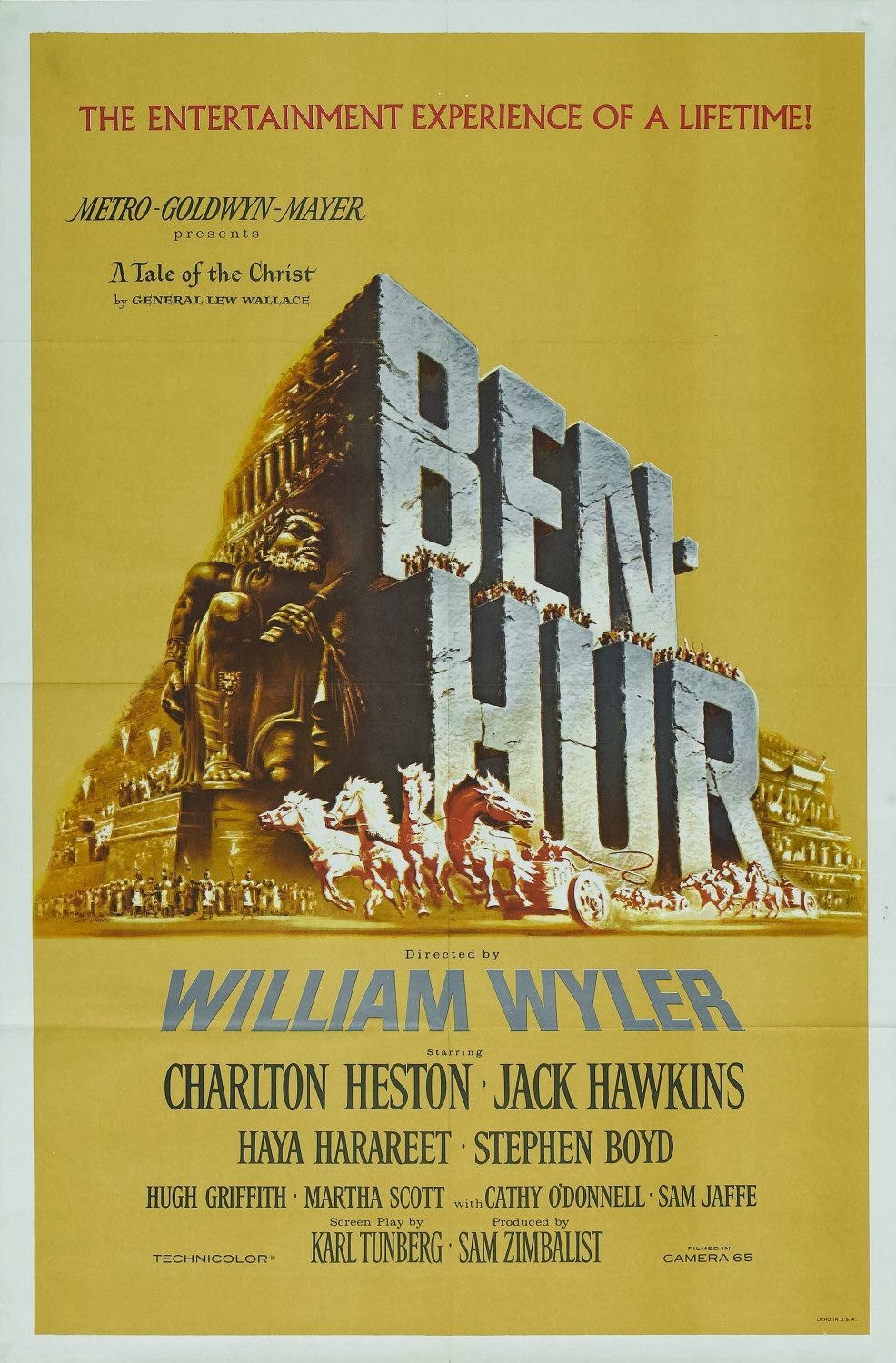
Miklos Rozsa: Ben-Hur (1959) - Suite


1:36:33- 1:44:00 mins

Now at the very beginning of the concert I noticed that behind the stage was an enormous organ. I don't know why but I'm always fascinated by organs - whether it's in a cathedral or theatre, they just always dominate the structure with their huge pipes and imposing size. The one in the Royal Albert Hall is a monster and I was thinking throughout the entire concert - I hope they play that! They saved the best for last, and probably with the best soundtrack to showcase the power of an organ. Ben-Hur is an epic film in every sense - it's story, it's length, and it's hero. You need one hell of a soundtrack to carry those chariot races and the physique of Charlton Heston, and Miklos Rozsa really pulled it out of the bag with this one. 


As is pretty obvious if you read this blogpost, you'll notice how picky I am with opening bars of scores. This one is exceptional. Talk about dramatic. You feel as if you've opened some ancient chest lost in the sands of some faraway desert. Those opening bars tell us that Rozsa means business - this is a tale of epic heroism, bravery, and unmatched entertainment on the largest scale. The organ, that I'd had my eye on for the past hour and a half, is finally in use - thundering through the theatre and shaking the building from head to foot. During an era where Hollywood churned out Roman epics (or rather, sword-and-sandal pictures), Ben-Hur stood head and shoulders above them all. The score is equally as show-stopping as the film and it's Oscar-winning star, Heston. It's one of those scores where the orchestra are put on overdrive, and the composer pushed the boundaries on writing a film score. What a way to end the set. A brilliant choice by Wilson and performed flawlessly by the orchestra - you wouldn't think that they'd been playing extremely difficult, intricate, scores for near two hours straight. 


Franz Waxman: 'The Ride of the Cossacks' from Taras Bulba (1962)


1:45:44 - 1:51:00 mins
A total surprise - this was not in the programme! I haven't seen or even heard of Taras Bulba, but I definitely knew the theme. What a wonderful treat to not have the show end just yet!

As you can imagine, the sold-out audience gave a standing ovation and determined applause to those exceptional musicians and that wonderful conductor. Everyone was on their feet, everyone had a beaming smile, and everyones hands were probably sore after the amount of clapping. I'd had a great day in London and was overly happy anyway because I was on a mini break, but this concert elevated my mood even more. Nothing could get me down for days afterward. I had one of the best nights of my life, and all for £21?


So, what did I learn from my first experience at BBC Proms?
Firstly, book tickets on the day they are released. Even though I had a great evening and the sound was superb, sitting right at the top of the Royal Albert Hall was uncomfortable, cramped, and warm. Plus I missed seeing the conductor and musicians up-close and had to wait for the televised version to see any bits I'd missed (this was very noticeable in the Tom & Jerry segment)

Secondly, I dressed fine. We experienced a very warm summer in the UK this year, but I wasn't cold in the theatre. I'd advise having a cardigan or a light jacket/blazer with you just in case. 

Thirdly, make the most of the place. During the intermission I thought I don't need refreshment but I bought some Haagen Dazs iced cream (vanilla - amazing!) and loved it. Sometimes we can be a bit stingey when we've spent money on tickets, travel, meals that day, and other touristy things, but so what. You're there now and you won't get this evening back. Odds are you won't have a proper break like this for another year, so buy the programme, buy some refreshment, have a drink at the bar. Make the most of your surroundings. 

I had the absolute best time at Proms and intend to go next year - especially if John Wilson's orchestra are playing. I love classic Hollywood and it's so rare to actually get a chance at hearing music from that era live. But that's what is so great about BBC Proms, it gives you the opportunity to hear all that wonderful music and see that incredible talent - something you may not have considered doing before. I highly recommend Proms. Take a day trip to London and stay overnight, or spend the weekend in the capital - there is so much to see, do, and enjoy, and Proms will just be the cherry on the cake for you. 

A final word on John Wilson - as with anything I watch or hear I look up the actor/film/etc online afterwards. There are interviews with him on YouTube and this man works really hard. The amount of effort he puts into arranging these concerts is unreal, especially when you consider how most of the music he works with was destroyed decades ago. For someone to spend their life piecing together lost music and trying to get the music just right, is incredible and I admire Wilson enormously. His gift for music and passion means that people like myself get to enjoy wonderful concerts like the Prom he put on this summer. His orchestra are supremely gifted and talented - the sheer skill they demonstrated on that stage was breathtaking and made me pretty jealous - I wish I could play an instrument and play as well as any one of them. It was an honour, privilege, and pleasure to be present that evening. From what I understand John Wilson's orchestra tour every year and they have an album out. Fingers crossed they perform at Proms next year!